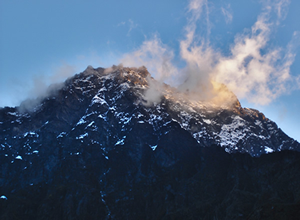
Hike to the Highest Point at Margherita Peak

Rwenzori Mountains National Park

Climate of the Rwenzori Mountains

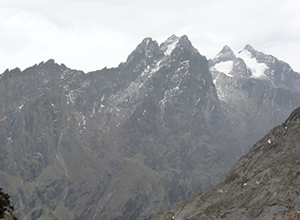
Rwenzori Mountains referred to as the Mountains of the Moon are amazing to explore. The Mountains include unique climatic zones in Africa which are shaped by a combination of equatorial location, altitude, topography and atmospheric systems. This results in a complex and highly variable mountain climate that is different from the surrounding lowland areas.

The Rwenzori Mountains experience a tropical equatorial climate with strong altitudinal variation as the climate conditions change dramatically as you move up the mountain.

Key features include

High rainfall throughout the year, Persistent cloud cover and mist, Relatively small seasonal temperature variation, Distinct wet and dry season as well as Presence of glaciers despite equatorial location. They are referred to as “rainmakers” due to their heavy and frequent precipitation.

Rwenzori Mountains Climatic Controls

1. Inter-Tropical Convergence Zone (ITCZ)

The most essential climatic influence is the Inter-Tropical Convergence Zone (ITCZ) a low-pressure belt where trade winds meet. When the ITCZ shifts north or south, it brings heavy rainfall to equatorial regions. The Rwenzori Mountains get peak rains when the ITCZ passes overhead around the months of March–May and September–November.

2. Altitude

Altitude is the other main control and this varies depending on the area you are at along the Mountain. Lowlands include warm and humid altitude, Mid-elevations consist of cool and wet altitude where as high altitudes include cold, alpine conditions with frost and snow. The Temperatures decrease sharply with elevation, creating vertical climate zones.

3. Relief and Topography

Rwenzori mountains act as a barrier to moist air masses, causing orographic rainfall (air rises, cools, and condenses), Persistent cloud formation
High humidity levels.

4. Rainfall Patterns

The Rwenzori Mountains are one of the wettest regions in East Africa receiving annual Rainfall of up to 2,500 mm or more annually in higher zones. The Lower areas receive around 750 mm. There are two rainy seasons that occur in the months of March – May (long rains) and August – December (extended rains). There are also rains on the months of June – August, December – February. In the dry season, rainfall still comes through frequently hence conditions remail humid and misty annually.

5. Temperature Changes

Temperatures in the Rwenzori Mountains varies majorly with altitude rather than season i.e Low and Mid Elevations (1500–3000 m) experience Day: 10°C – 15°C
Night: 2°C – 6°C, High Elevations (above 4000 m) Day: near freezing, Night: can drop to -10°C.

6. Altitudinal Climatic Zones

The Rwenzori climate is best understood through vertical zonation including Lowland Tropical Zone (below 1500 m) which is Hot and humid with moderate rainfall, Montane Forest Zone (1500–2500 m) with heavy rainfall, Dense forests, High humidity and mist, Bamboo Zone (2500–3000 m) with cool temperatures,
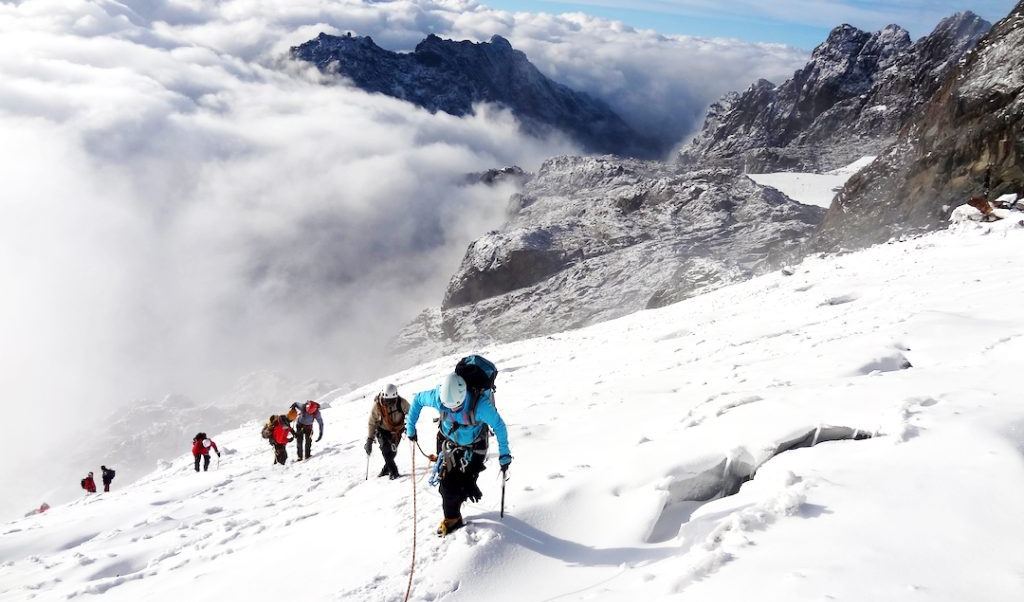
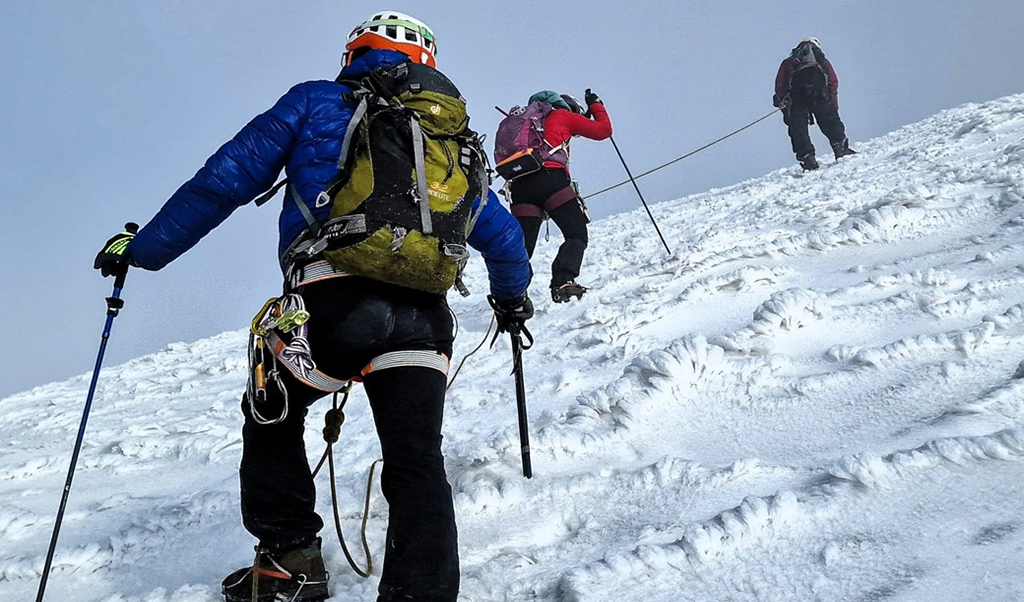
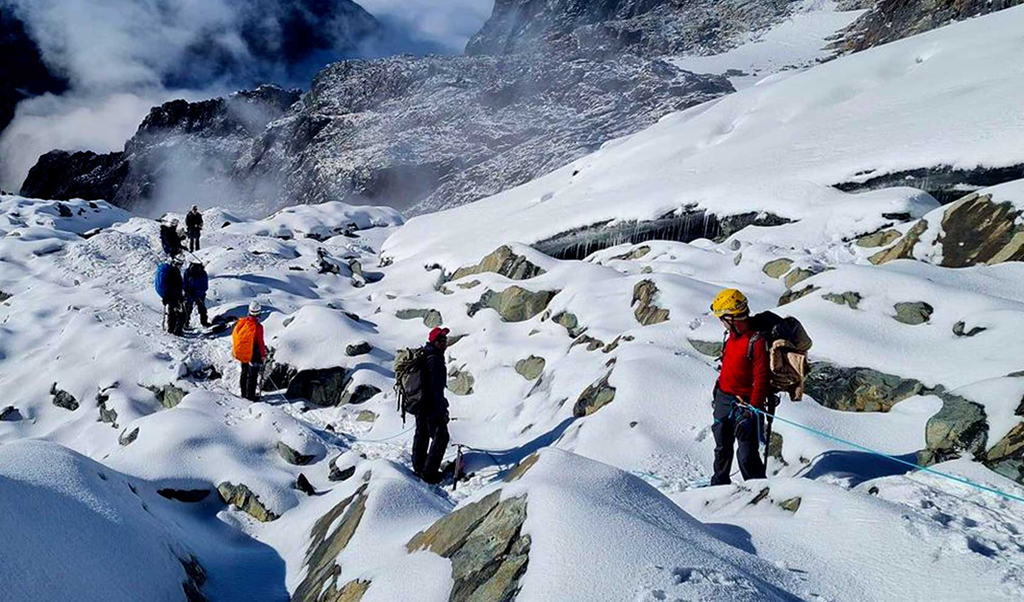
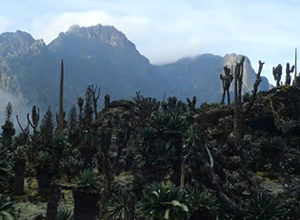
Frequent fog, Heather and Moorland Zone (3000–4000 m) which is cooler and wetter covered by moss, lichen, and giant plants as well as the Alpine Zone (4000–4500 m) that is cold, wet and windy. There is also the Nival (Glacial) Zone (above 4500 m) with snow, ice and Glaciers.

7. Glaciers and Snow

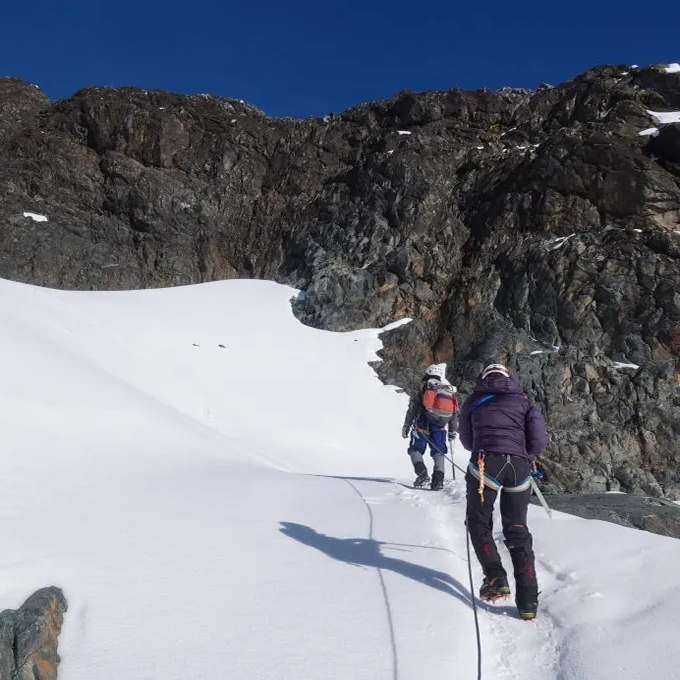
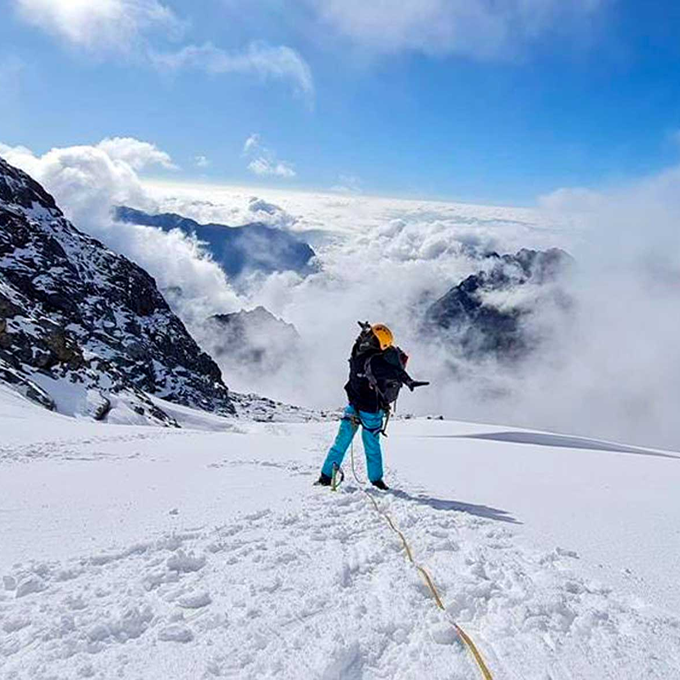
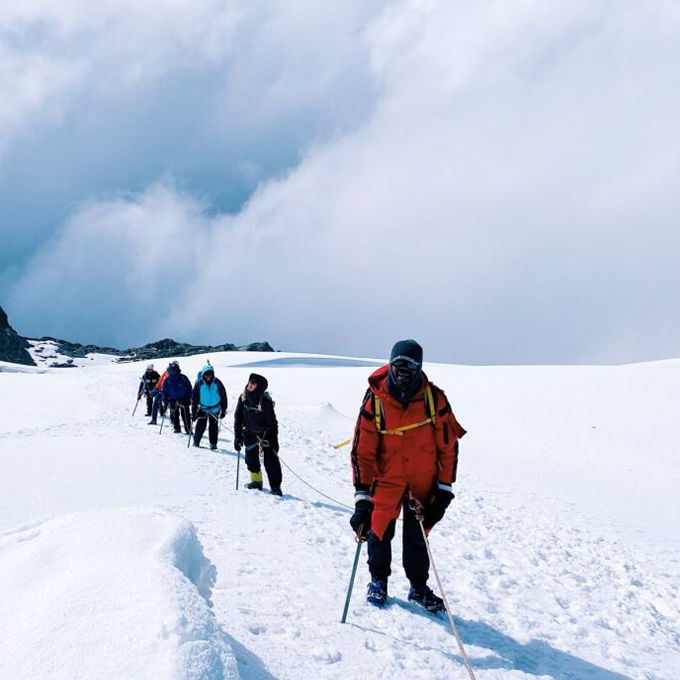
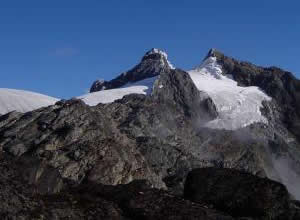
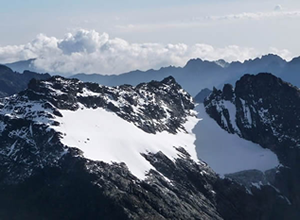
One of the most amazing features of the Rwenzori Mountains’ climate is the presence of equatorial glaciers that are found on peaks like Mount Stanley, Baker, and Speke.

8. Humidity, Mist and Cloud Cover that come up due constant cloud cover, thick mist, high humidity.